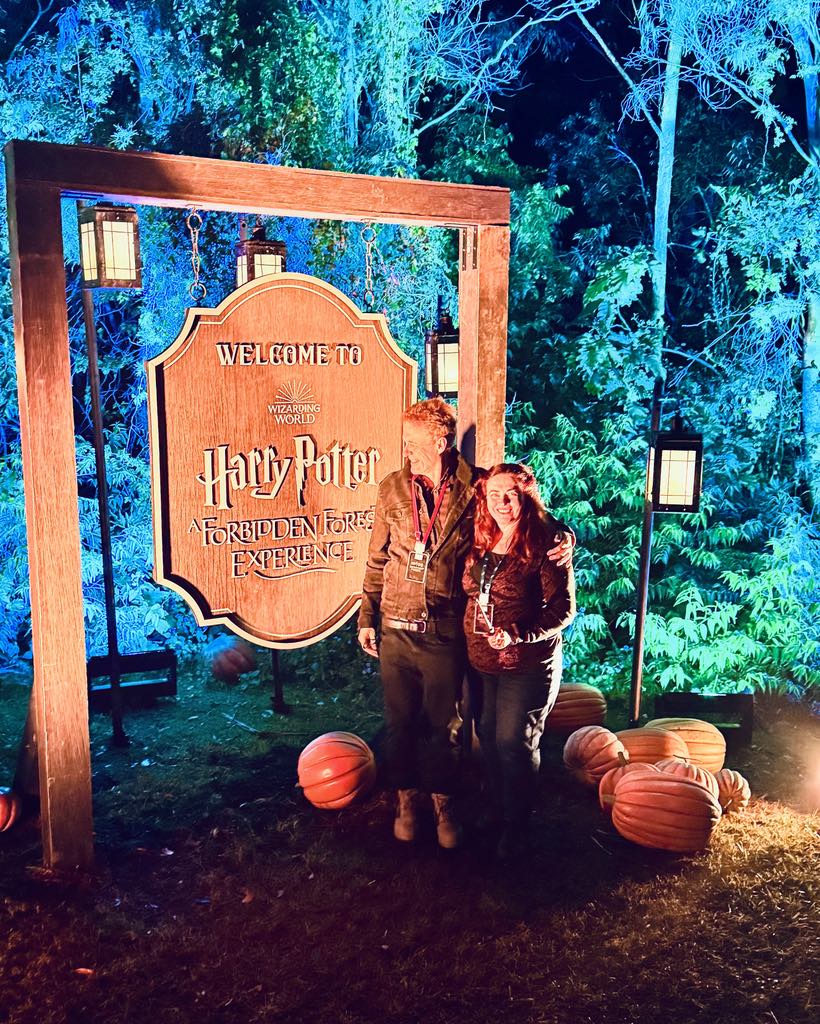
What the Harry Potter Forbidden Forest Experience can teach Summer Camps & Adventure Parks about Creating Unforgettable Experiences
What if your customers aren't actually looking for another activity? What if they're looking for a story they can step inside? I was reminded of this recently while walking through a Brisbane forest on a mild winter’s night. I was enthralled with marvelous sensory effects, impressed by the logistics, and amazed by the crowds.
This is the Harry Potter: A Forbidden Forest Experience.
I found myself thinking less about Harry Potter and more about what makes an experience memorable. Because this wasn't simply a walk through the woods. It was a story.
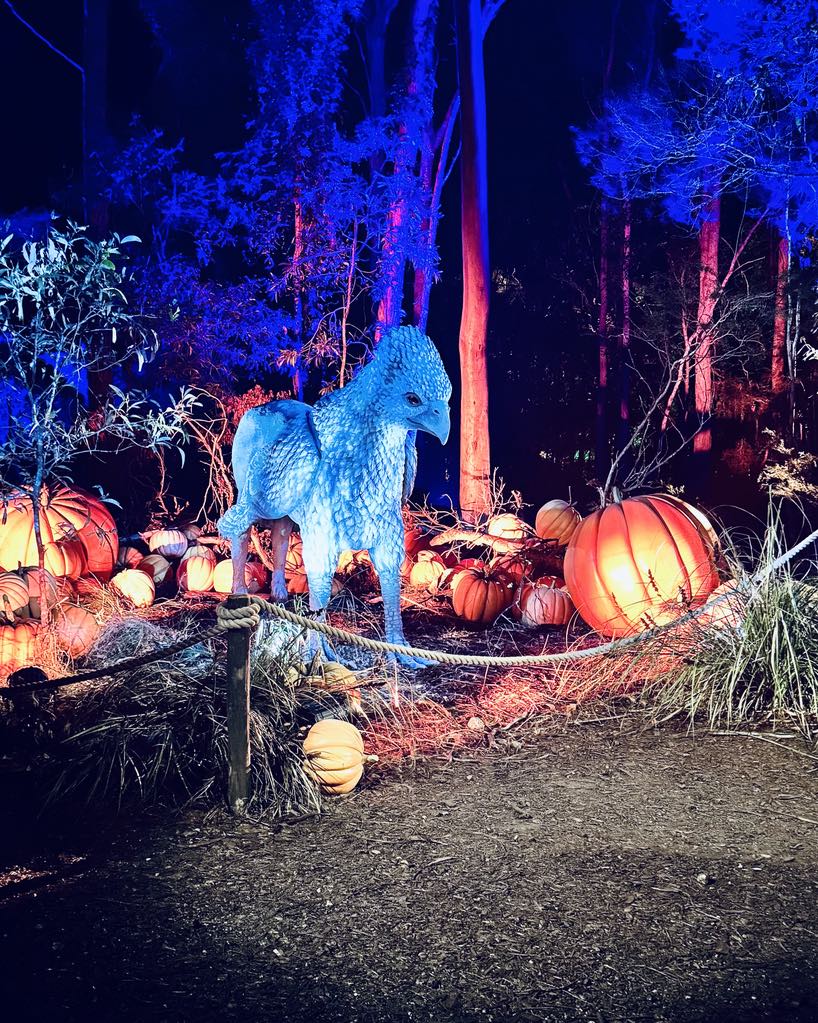
Not just because of the nostalgia and a forest full of flying patronuses (or that patroni?), spooky spiders, and Hippogriffs.
But because the entire experience was designed to captivate, immerse, and transport visitors into J.K. Rowling’s wizarding world.
Since 2021, the Experience has toured the United Kingdom, USA, France, Singapore, and Australia.
It was a story.
And that's an important lesson for anyone running a summer camp, outdoor adventure park, or live-action attraction.
People don't just want something to do. They want something to experience.
Think of this as the pre-show.
One of the cleverest things about the Forbidden Forest was that the storytelling didn't suddenly begin when you entered the trail. It started at the entrance.
Or maybe, it even started with the online ticket booking experience and confirmation. (That's a whole other digital marketing story!!)
But let's just stick to the physical site for now.
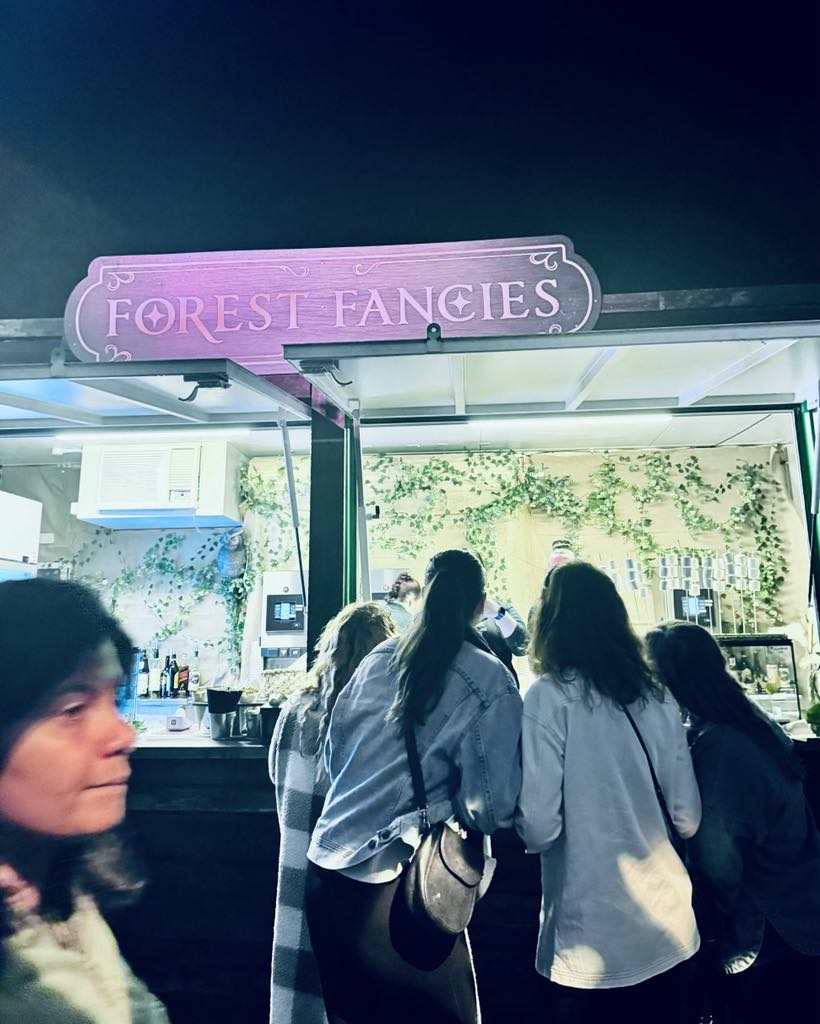
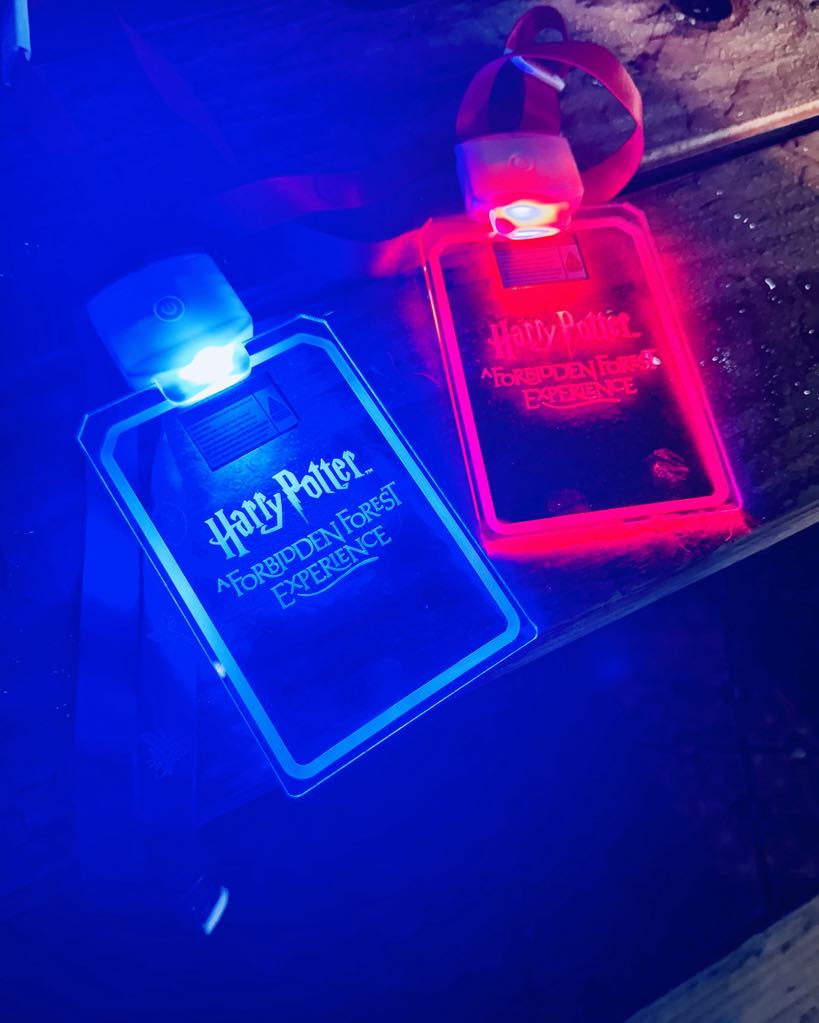
Themed food outlets, merchandise, lanyards, wands, and other details immediately established the world visitors were about to enter. The forest itself then became part of that story.
It’s estimated that more than 2 million people have experienced this pre-show internationally.
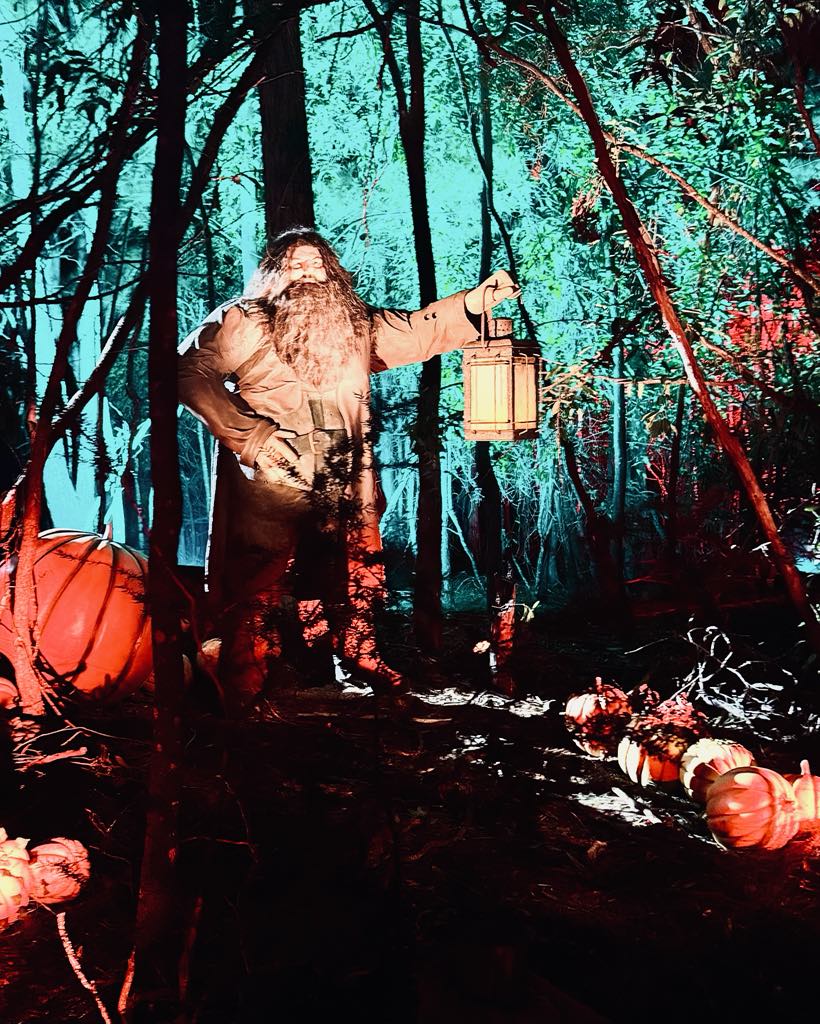
As I wandered through the Mt Cotton misty woods, seeing Harry and Hagrid, and watching spiders scuttle out of tree stumps, I couldn’t help but think: This is exactly what we’re aiming for with Battlefield Sports.
Let me explain.
An attraction isn't just the 60 or 90 minutes when the customer is participating in the activity. The experience starts before the activity and continues afterward.
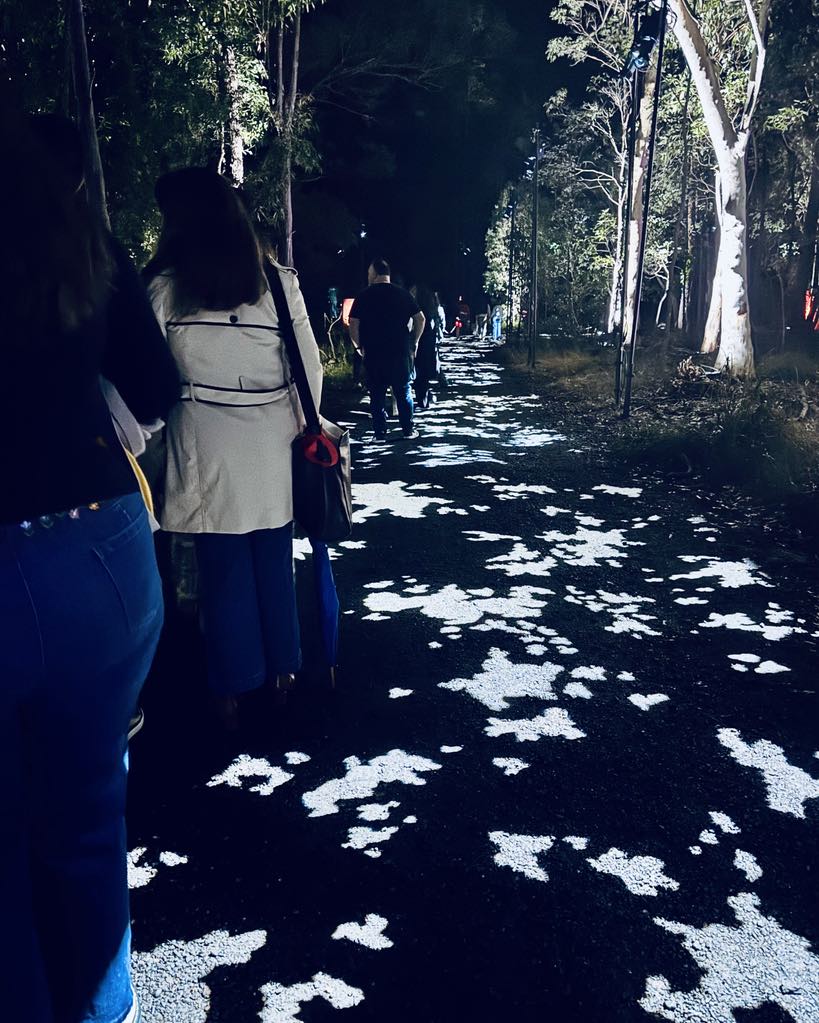
The experience started with a simple forest path.
The production team transformed the Sirromet Winery’s woodland tracks into an enchanted oasis.
The entry plaza featured a guest services pod where visitors could scan their tickets and collect themed merchandise.
We got Gryffindor and Ravenclaw lanyards and a Harry Potter wand (more about the wand later).
"Savvy guests are demanding these types of experiences. When creating a completely immersive environment, one way to do that is by tickling all the senses. You want to make it multi-sensory. We've got five senses. The more you can employ, the more immersive the guest experience becomes," said Chris Rokosz, Making Fun Media / What To Post.
The entrance area also offered a variety of themed food booths.
We got the Cauldron Feast Lamb Stew and a Jumbo Smoked Turkey Leg from Dragonfire Roasts. So, the experience began with taste.
You can taste the adventure!
With dinner sorted, we went through the first merch shop and into the experience.
Now, I know you often see the gift shop at the end of the theme park attraction, but I was fascinated to see that the production team had also built one at the entrance.
It lets patrons buy last-minute robes, wands, or whatever. Brilliant!
For an adventure park or summer camp, this might mean:
✅ The way guests are welcomed
✅ The story they hear during the game briefing
✅The physical environment they enter
✅ What they see while waiting
✅ The photos they take
✅ The food or merchandise around the experience (been there, done that, got the T-shirt)
✅ What they talk about afterward.
The Takeaway for Adventure Operators? Don't ask: "How can we make our activity more exciting?"
Instead, ask: "How can we make the entire customer journey feel like an adventure?"
Imagine two signs at a summer camp.
"LASER TAG" 60-minute outdoor laser tag experience.
Or... "OPERATION: BLACKOUT"
Your team has been deployed behind enemy lines. Your mission: locate the missing communications device, recover it, and make it back to base before the opposing team finds you.
Same equipment. Potentially the same playing field. Completely different experience.
That's the power of storytelling. The Forbidden Forest works because visitors aren't simply walking through trees.
They're entering a world. The environment, sound, lighting, props, and interactions all reinforce that story.
For a summer camp or adventure park, you don't need a Warner Bros. & Universal Studios franchise to do this.
This is what Cedar Springs Camp did. They created a story around the laser tag games. And it worked!
There was food and drink.
Fog.
Lighting. Sound.
Interactive props.
Environmental details.
Even the forest itself contributed to the experience. The production deliberately layered sensory elements to create immersion.
Just ahh-mazing!
This was one of my favorite observations from the experience. Every 100–150 feet or so, there was something new to discover.
Sometimes it was tiny. Sometimes it was enormous.
There were coins scattered around the grass. Interactive elements. Giant installations. Creatures emerging from the darkness. Different lighting effects and projections.
It was an opportunity to sniff out the immersion.
It didn’t take long for me to become completely immersed.
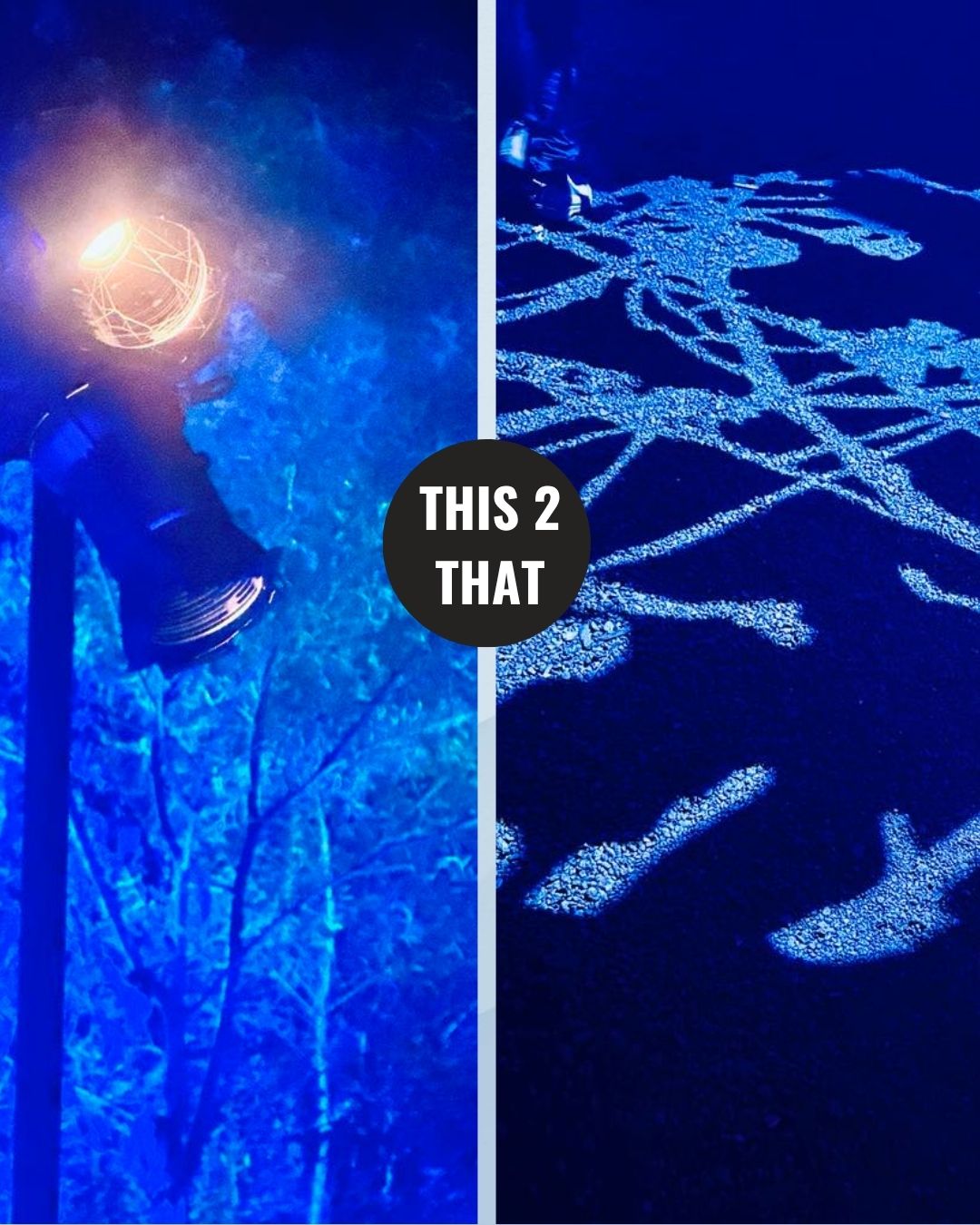
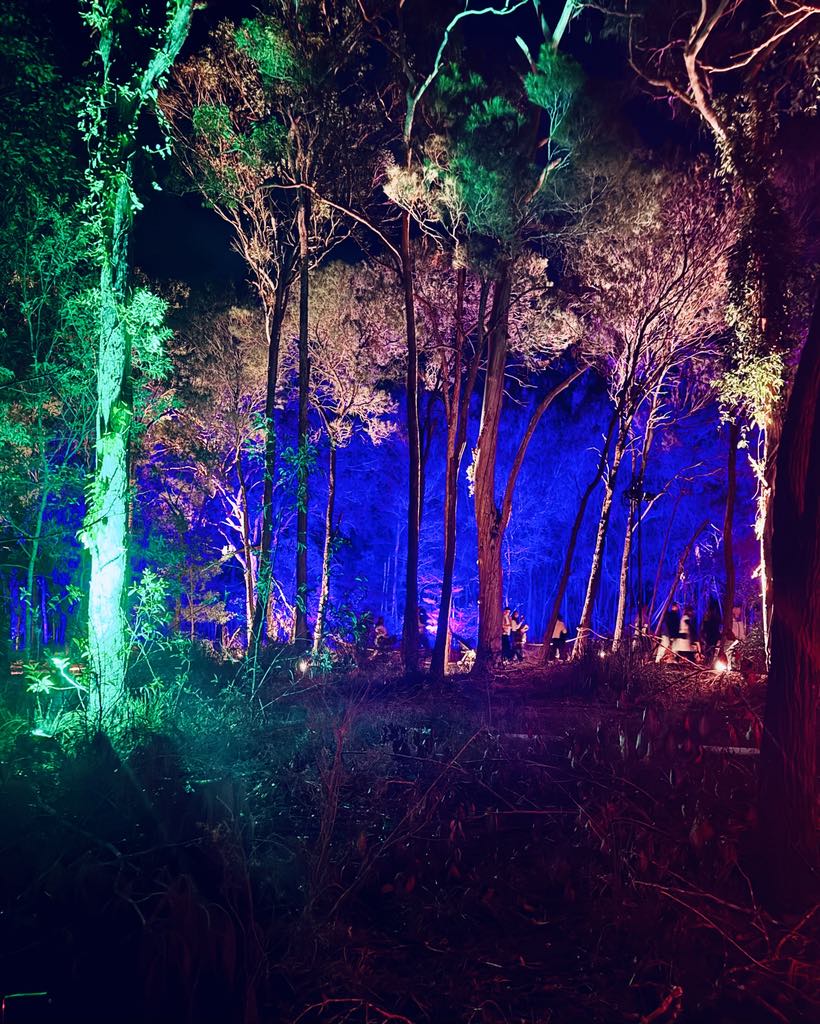
The organizers cleverly used fog, ambient lighting, fantastic sound effects, and interactive props to turn the forest into a living, breathing part of the Wizarding World.
I was also impressed with the digital images and video projections that dynamically changed the look of the woodland.
Staggering the LFX, with some placed on the edge of the path and others positioned many feet (or meters) into the forest, made the area appear larger and more complex.
So, the experience included sight.
Seeing is believing (and playing!).
If guests spend five minutes walking through an environment without anything changing, they're just walking.
Give them:
✅ A surprise
✅ A reveal
✅ A challenge
✅ A sound
✅ A visual effect
✅ A character
✅ A new objective
Something hidden to discover …and suddenly they're participating.
(Take inspo from the starkle and spooks from Halloween Haunts. They never disappoint!)
The Forbidden Forest didn't need to build an entirely new forest.
It used the environment that was already there. The woodland, paths, trees, and existing landscape became part of the experience, with lighting, sound, projections, and props transforming the space.
That's particularly interesting for summer camps and adventure parks. Because you may already have the most expensive part: the environment. Bushland. Trails. Fields. Buildings. Rocks. Trees. Old structures. Open spaces.
That's a very different way of thinking about reusing the assets you already have.
But it wasn’t just about the lighting spectacle.
What stood out was the layering of sensory experiences: the sounds, the lights, the iconic voice snippets, the tactile props, and yes, the smells. All working together to blur the line between fantasy and reality.
The snippets of conversation throughout the Experience amped up the thrills.
Such as "It does not do to dwell on dreams and forget to live," said Prof. Dumbledore.
So, the experience included sound.
Sound on, game on!
Some small, like the placement of hundreds of various gold coins scattered across the grass around suitcases filled with animatronic Nifflers and shiny objects.
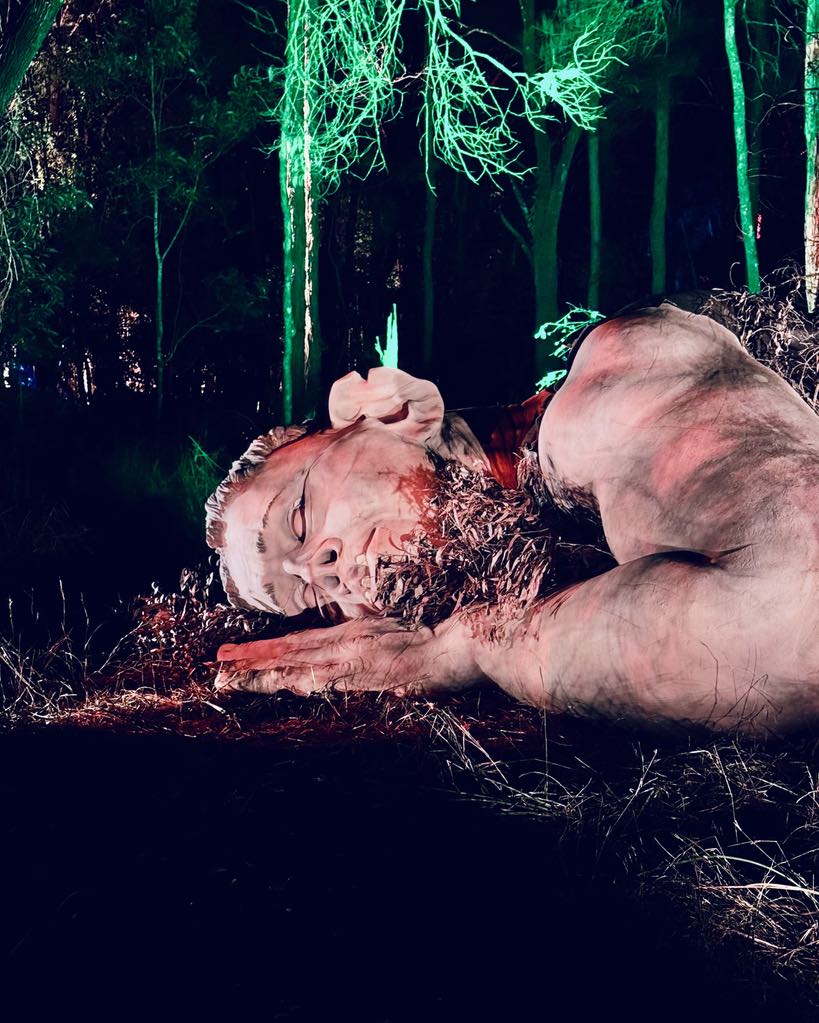
Some grand like a ginormous sleeping giant or life-sized Ford Anglia (not flying but looking cool, anyway).
At one point, I stood under a canopy of eucalyptus trees, and a bewitching white unicorn and a golden foal emerged from the darkness. It was breathtaking! Not because it was flashy, but because it felt authentic.
That’s the secret.
At Battlefield Sports, we talk a lot about “immersive gaming.”
But immersion isn’t just a buzzword. It’s a combination of high-quality props, dynamic sound effects, and purposeful software that make players feel like they’re in the game.
This is perhaps the biggest lesson. You don't need animatronic creatures, a global entertainment franchise, or a huge production budget to create immersion.
Start smaller. A big attraction might use: Giant installation
Your equivalent: One spectacular signature prop; professional soundscape
Your equivalent: Music + environmental effects + game sounds; character interaction
Your equivalent: A compelling mission briefing; interactive technology
Your equivalent: Game objectives and interactive challenges; themed merchandise
Your equivalent: Team badges, mission cards, or player achievements; a huge story world
Your equivalent: A simple narrative that gives the game a purpose
The objective isn't to copy a multi-million-dollar attraction. It's to understand why it works.
Think about it:
Another big takeaway from the Forbidden Forest? The power of brand consistency. From the moment you entered the forest to the final gift shop at the exit, the Harry Potter brand was meticulously honored. The fonts, the music, the costumes, the staff everything aligned with the JK’s world.
This is where live-action gaming gets particularly interesting.
At Battlefield Sports, we talk a lot about immersive gaming.
But technology alone isn't the experience. Technology is the tool. The story is what gives it meaning. Our live-action gaming systems combine rugged outdoor equipment with sound effects, lighting effects, and software designed to make the environment part of the game.
The same technology can be used across different environments and game concepts. Imagine transforming:
* A bush trail into an expedition.
* A sports field into a battlefield. A school camp into a rescue mission.
* An existing outdoor area into a zombie survival scenario.
The technology doesn't have to dictate the story. It should help you tell it.
At Battlefield Sports, we’re proud to have built a brand that lives and breathes immersion, innovation, and edge-of-your-seat excitement.
And it shows. From our rugged, outdoor-tough laser tag gear to our patented SATR software that adapts to any genre: fantasy, zombie, or battle royale.
When your brand experience is seamless and your tech delivers on the promise?
That’s when customers become fans.
Another important lesson for us operators. If your attraction is always exactly the same, your customer has less reason to return.
But if the underlying technology lets you create different experiences, you suddenly have more possibilities. A group might come for:
* Operation Blackout. Come back for: The Lost Expedition.
* Then: Zombie Outbreak. Then: Battle Royale.
The physical environment might barely change. But the story, objectives, and experience can. That's particularly valuable for businesses with an existing customer base.
You aren't necessarily looking for another piece of land. You're looking for ways to create more experiences from the assets you already have.
Whether you're managing a pop-up laser tag event across town or relocating a massive production across the globe, logistics are essential.
I reckon that crew labeled every lantern, every statue, puppet, and animatronic.
So when they pack up and move the production to another city or country, they can recreate the experience with the same detail.
Checklists on top of checklists!
One thing I noticed throughout the experience was that there were plenty of ticketing, food, and retail staff, plus extras to manage the queues. But there were no live actors. There were no Professor Snape or Dumbledore lookalikes.
This likely meant that the production team could employ local staff.
But that did not mean that the experience was not interactive. Several spots across the trail allow guests to put their magic powers to the test.
Using your wand, you can cast interactive spells like “Incendio” to light up the lamps along the forest, or “Colovaria” to change the color of hundreds of glowing mushrooms.
So, the experience included touch.
Feel the thrill.
Likewise, the Battlefield Sports live-action gaming engine, “SATR3,” uses patented technology to enable interactive games with fewer staff.
Its “lock-out” features mean you can do this with limited training.
“Happiness can be found even in the darkest of times, if one only remembers to turn on the light,” said Albus Dumbledore in Harry Potter & the Prisoner of Azkaban.
This is escapism. This is being fully immersed.
While official box office figures have not been released, Perplexity reports that the average ticket price is about $64, with deluxe packages around $97. If 10% of patrons opt for the VIP deal, then the estimated turnover is $135 million.
When you factor in the food and themed merch (at a guess, giving a 40% bump), the total revenue would be around $188 million. I’ve got to give it to Warner Bros. for delivering this irresistible experience for insatiable Potterheads.
Walking through the Forbidden Forest reminded me of something important: people don’t just want games. They want stories.
They want connection.
They want to believe, even if just for an hour or two, that they’re a wizard or a hero.
Gamers don’t just want fun. They want meaningful mayhem.
They want to believe they’re the hero in a live-action story. So, whether you're designing an enchanted forest or your next summer camp program, never underestimate the power of great technology, layered immersion, and unforgettable props. Because when the tech works, the story shines.
And in our case? The battlefield comes alive.
For summer camps, is a good opportunity.
Kids don't necessarily remember the technical specifications of the activity they participated in. They remember: The mission. The funny moment. The surprise. The competition.
The story they told their friends afterward. That's why a simple activity can become a camp highlight when it has a compelling narrative.
Instead of: “At 2 pm, your group is playing laser tag.”
Try: “At 2 pm, your team has a mission.”
That small shift changes the psychology of the experience. It also gives your staff something more interesting to deliver.
For a larger adventure park, the opportunity is broader still.
An immersive live-action experience can potentially become:
- A standalone attraction
- Part of a larger adventure package
- A school-camp activity
- A vacation-care experience
- A birthday offering
- A corporate/team-building activity
- An evening attraction
- A seasonal experience
- A repeat-visit product
The goal isn't simply to add another activity to your attraction list. It's to create something that fits into your existing business model and makes your existing assets work harder.
The real lesson from the Forbidden Forest.
Walking through the Forbidden Forest reminded me of something important. People don't just want games.
They want stories. They want connection. They want discovery.
They want to feel like the hero.
Even if it's only for an hour. And that's the opportunity for summer camps and adventure parks.
You don't necessarily need more land. You don't necessarily need a giant new attraction.
You don't necessarily need a multi-million-dollar production.
Sometimes you need to look at what you already have and ask: “What story could we create here?”
Because when you combine story + environment + technology + sensory experiences + great gameplay, something interesting happens. The activity becomes an experience. And the experience becomes something people remember.
Ready to explore what's possible? Not sure if live-action gaming is right for your venue? Take the 2-minute Adventure Quiz and discover whether live-action gaming could be a good fit for your venue, customers and business goals. Take the Quiz!
©2026 All rights reserved
GDPR (General Data Protection Regulation): A European law that helps protect people’s personal data and privacy. It sets guidelines for how organizations handle personal information and gives individuals rights to access, correct, or delete their data.
Necessary
A session cookie is a temporary cookie used to maintain user activity during a browsing session and is deleted when the browser is closed.
GDPR CookieSession cookie (GDPR): A temporary cookie used only to enable essential website functionality during a user’s session and deleted when the browser is closed.
Functional
Used to provide live chat and customer support functionality, allowing visitors to communicate with our team in real time.
Used to manage and deploy website tags from one place. Google Tag Manager itself does not collect personal data, but it may load other tools that do.
Tracking
Used to collect anonymous information about how visitors use our website, such as pages visited and time spent on the site. This helps us improve website performance and user experience.
Marketing - Section